


If you already have a Hanko in your hand, you must be know that inkpads and case are the important set for your Hanko. In Japan, there are several types of Inkpads. Inkpad is origin from China and Japan modify it with several sources of colors. Here is types of Inkpads that you should know:
印泥 Indei Inkpad
Indei is a traditional Inkpad product that has been used since ancient times in China. It is made by combining dried Mugwort with Pearl Sand (mercury sulfide) from China, coloring it with pigment, and adjusting its viscosity with oils. It is characterized by the sharpness of the imprint, the depth of its color, and it’s less prone to discoloration and smudging. This inkpad is often used with carved stone stamps such as Rakkan-In.
 On the downside, it is a little hard to dry and requires some maintenance, so it can be said that it is for advanced users. If left for a long time, vermilion and oil will separate and become sticky, especially in the heat of summer. In that case, it may be necessary to cool it in the refrigerator before using it again, or remove the oil with oil blotting paper.
Despite any drawbacks, it is still highly regarded and loved by seal carving artists and calligraphers. Indei is perfect for use in exhibited works and collection works, as it creates a crisp, long-lasting impression.
Please find our best product of Nikko-in Indei Vermilion Inkpads here.
練り朱肉 Kneaded Inkpad
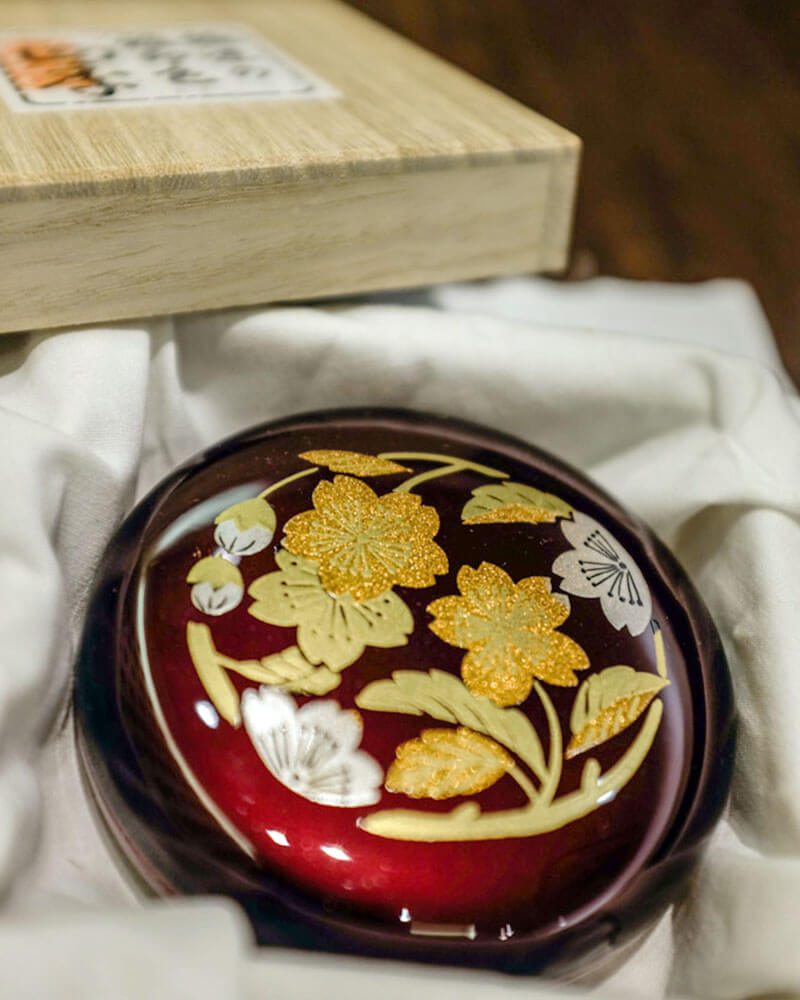
Kneaded Inkpad is sometimes used interchangeably with indei, but it is slightly different. First, Indei is made in China, while the kneaded inkpad is made in Japan. Kneaded vermilion is made by adding pigments, plants, and Japanese paper fibers to a sublimated mercury sulfide called silver vermilion, and then kneading it with castor oil or pine sap. The materials are also slightly different. It is a little harder than Indei, but the pigment and oil will also separate over time if left unattended.

≪Good Points of Kneaded Inkpad≫
- The color and texture are deep and beautiful.
- The imprint can be pressed clearly and clearly.
- The vermilion remains beautiful even after a long period of time.
- Available in several bright and bold color variations such as yellow, blue, and green.
- You can enjoy the feeling of making a quality impression, especially with a large stamp.
≪Weak Points of Kneaded Inkpad≫
- It takes more time to dry after pressing.
- Maintenance is required before and after use.
- Sensitive to drying and temperature changes.
- Not suitable for carrying around, should be kept stationary.
For this kneaded Inkpads, we offer a special Nikko-in Premium Four Season Kneaded Vermilion Inkpad. It is a safe and nature-friendly organic kneaded vermillion inkpad of the highest quality. The case was lacquered with a makie painting in Aizu, Fukushima.
スタンプ朱肉 Stamp Inkpad
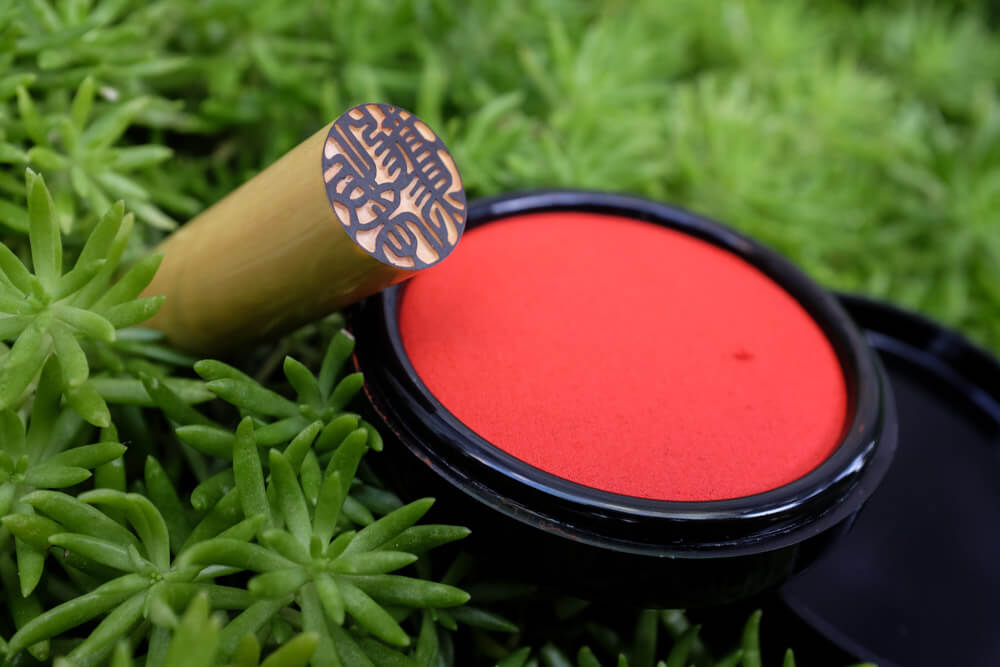
This simple red inkpad type is often found in banks, stationery stores, home improvement stores, etc. It is a sponge made by coloring vegetable fats and oils, synthetic resins, and chemical substances with pigments and making them into ink. The price is affordable and quick-drying without any hassle. However, the ink from these inkpads may fade, and the imprint may become lighter over time. It is also not as water-resistant, and can fade away if it gets wet. Therefore, although it is quick and convenient for everyday use, it’s not the best for archival purposes, and not suitable for long-term storage.

≪Good points of Sponge Inkpad≫
- The sponge is stained with red ink (liquid) and can be easily stamped.
- Impression dries immediately after pressing.
- Maintenance can be done simply by adding more ink to replenish the pad.
- Portable
≪Bad Points of Sponge Inkpad≫
- There is no depth in the color.
- The imprint is inferior in sharpness.
- May fade over time.
That was a brief explanation of Inkpad types, as the Hanko owner please choose carefully which Inkpad that suit best for you. Because your Hanko is you.
 All prices are in ¥
 Approximated $